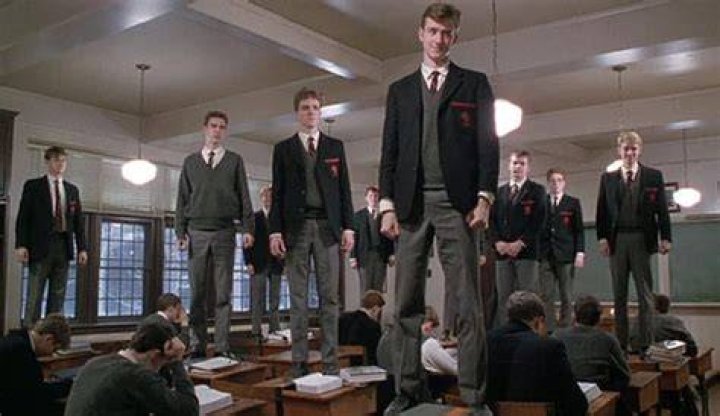
What is the plot of Dead Poets Society?
 Sarah Scott
 A new English teacher, John Keating (Robin Williams), is introduced to an all-boys preparatory school that is known for its ancient traditions and high standards. He uses unorthodox methods to reach out to his students, who face enormous pressures from their parents and the school. With Keating's help, students Neil Perry (Robert Sean Leonard), Todd Anderson (Ethan Hawke) and others learn to break out of their shells, pursue their dreams and seize the day.
.
Considering this, what is the climax of Dead Poets Society?
Climax. The movie's climax comes when Neil Perry, forlorn at the prospect of leaving Welton Academy, giving up acting, and following his father's strict plans for his future, takes his own life with his father's gun.
Also Know, what is the conflict in Dead Poets Society? The conflicts that have occurred throughout Dead Poets Society resemble a struggle to break free from the conformity that exists within every society. Mr. Keating opens the boys' eyes to a whole new world of freedom, but the boys' parents, specifically Neil's parents, don't necessarily agree with Mr. Keating's claims.
Moreover, what is the theme of Dead Poets Society?
In Dead Poets Society, the main theme and what the whole book is about is 'carpe diem, seize the day. ' Throughout the book, the readers learn to take advantage of any opportunity that comes their way.
Who is the antagonist of Dead Poets Society?
Gale Nolan is the headmaster of Welton Academy and the main antagonist in Dead Poets Society. He is a strict man who expects all students and teachers to follow the school's century old tradition.
Related Question Answers
What does the snow symbolize in Dead Poets Society?
Snow: Represents innocence and purity. Crown of Thorns: represents Neil's life. Has a biblical reference; Jesus sacrificed his life for what he believed in. Open Window: symbolizes the opportunities in Neil's life.What poems are used in Dead Poets Society?
Following Poetry has been used in the Dead Poet Society.- She Walks In Beauty - Lord Byron.
- The Ballad of William Bloat - Raymond Calvert.
- The Prophet - Abraham Cowley.
- To the Virgins, Make Much of Time - Robert Herrick.
- The Road Not Taken - Robert Frost.
- The Congo - Vachel Lindsay.