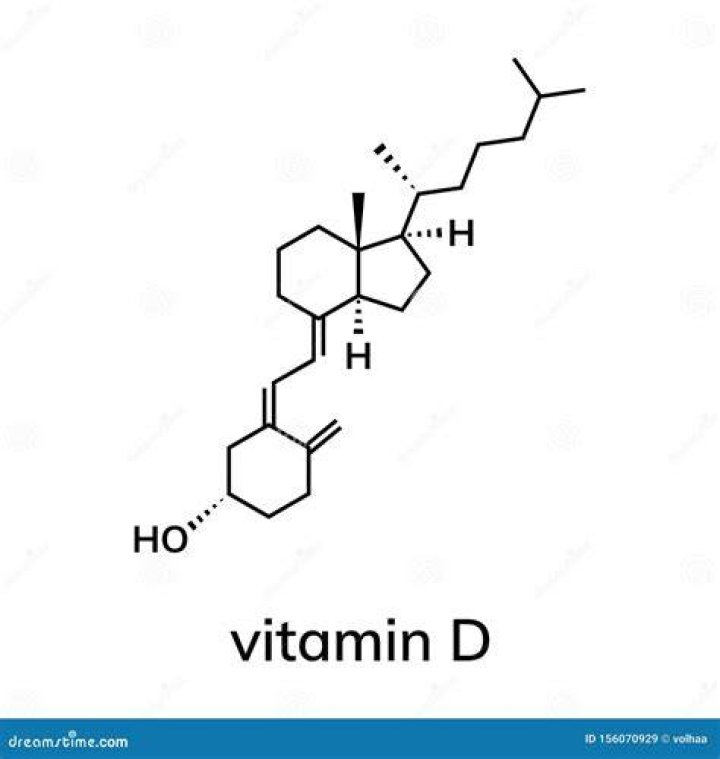
What is the chemical formula for vitamin D?
 Sarah Smith
.
In this way, what is the chemical structure of vitamin D?
Types
| Name | Chemical composition |
|---|---|
| Vitamin D1 | Mixture of molecular compounds of ergocalciferol with lumisterol, 1:1 |
| Vitamin D2 | ergocalciferol (made from ergosterol) |
| Vitamin D3 | cholecalciferol (made from 7-dehydrocholesterol in the skin). |
| Vitamin D4 | 22-dihydroergocalciferol |
Furthermore, what is vitamin D made from? What it is: Cholecalciferol is one of the two major forms of vitamin D. It's what your body naturally synthesizes in your skin during exposure to sunlight and it's also a commercially prepared supplement made from the lanolin retrieved from washing lambs' wool.
Moreover, what is the chemical name of vitamin d3?
(3β,5Z,7E)-9,10-secocholesta- 5,7,10(19)-trien-3-ol
What is vitamin D function?
The ergocacliferol form is often used as a food additive. The major biological function of vitamin D is to maintain normal blood levels of calcium and phosphorus. Vitamin D aids in the absorption of calcium, helping to form and maintain strong bones.
Related Question Answers
What is vitamin D also known as?
Vitamin D is commonly known as ergocalciferol (Vitamin D2) and cholecalciferol (Vitamin D3).Is d3 a hormone?
Vitamin D is a hormone the kidneys produce that controls blood calcium concentration and impacts the immune system. It is also known as calcitriol, ergocalciferol, calcidiol and cholecalciferol. The kidneys then convert the substance to calcitriol, which is the active form of the hormone in the body.Is vitamin D an element?
Vitamin D is essentially a hormone and is available from two sources. First, under the… The term vitamin D refers to a family of compounds that are derived from cholesterol. Both of these compounds are inactive precursors of potent metabolites and therefore fall into the category of prohormones.What happens when your vitamin D is low?
Symptoms of bone pain and muscle weakness can mean you have a vitamin D deficiency. Yet, even without symptoms, too little vitamin D can pose health risks. Low blood levels of the vitamin have been associated with the following: Increased risk of death from cardiovascular disease.How long does it take for vitamin D supplements to work?
Better Absorbed With MealsFor this reason, it's recommended to take vitamin D supplements with a meal to enhance absorption. According to one study in 17 people, taking vitamin D with the largest meal of the day increased vitamin D blood levels by about 50% after just 2–3 months ( 7 ).Who discovered vitamin?
Casimir Funk
What elements are in vitamin d3?
It is evident that vitamin D intake can facilitate the absorption and assimilation of essential inorganic elements (such as calcium, magnesium, copper, zinc, iron, and selenium) but also the uptake of toxic elements (such as lead, arsenic, aluminum, cobalt, and strontium).Where is Vitamin D found?
Known as the sunshine vitamin, vitamin D is produced by the body in response to skin being exposed to sunlight. It is also occurs naturally in a few foods -- including some fish, fish liver oils, and egg yolks -- and in fortified dairy and grain products.How is d3 made?
Vitamin D3 Is Formed in Your SkinYour skin makes vitamin D3 when it's exposed to sunlight. Specifically, ultraviolet B (UVB) radiation from sunlight triggers the formation of vitamin D3 from the compound 7-dehydrocholesterol in skin ( 2 ).What foods contain cholecalciferol?
It is found in food such as some fish, cheese, and eggs. Certain foods such as milk have cholecalciferol added to them in some countries including the United States.What is the name of vitamin E?
Naturally sourced vitamin E is called RRR-alpha-tocopherol (commonly labeled as d-alpha-tocopherol); the synthetically produced form is all rac-alpha-tocopherol (commonly labeled as dl-alpha-tocopherol).Is cholecalciferol a steroid?
Cholecalciferol (vitamin D3) is a fat-soluble steroid that is synthesized in the skin in the presence of ultraviolet light or obtained from the diet.What is cholecalciferol side effects?
Cholecalciferol Side Effects- Cough.
- difficulty swallowing.
- dizziness.
- fast heartbeat.
- hives or itching.
- puffiness or swelling of the eyelids or around the eyes, face, lips, or tongue.
- skin rash.