What is DOT 49 CFR?
 William Jenkins
 .
In this manner, what does 49 CFR stand for?
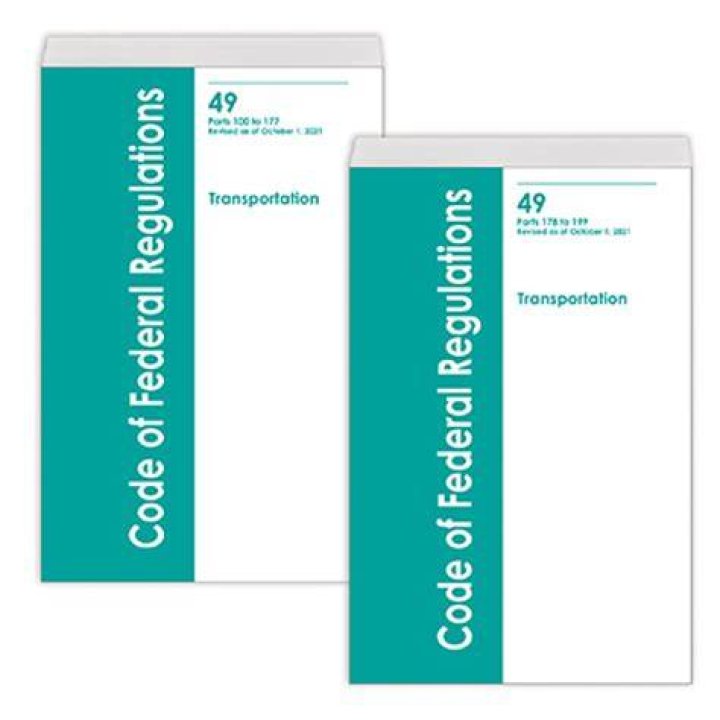
CFR Title 49 - Transportation is one of fifty titles comprising the United States Code of Federal Regulations (CFR). This title is available in digital and printed form, and can be referenced online using the Electronic Code of Federal Regulations (e-CFR).
Subsequently, question is, what is the 49 CFR Part 40? 49 CFR Part 40, or Part 40 as we call it, is a DOT-wide regulation that states how to conduct testing and how to return employees to safety-sensitive duties after they violate a DOT drug and alcohol regulation.
Also question is, what does the DOT 49 CFR regulate?
The Department of Transportation's (DOT) rule, 49 CFR Part 40, describes required procedures for conducting workplace drug and alcohol testing for the Federally regulated transportation industry.
What is considered a dot position?
The DOT requires transportation companies to implement a drug and alcohol testing program for all employees in safety-sensitive positions. Depending on the specific industry, additional regulations covering testing programs and procedures are made by agencies under the DOT.
Related Question Answers
How many CFR are there?
50
Who needs DOT training?
The Department of Transportation (49 CFR 172.704) makes training mandatory for almost anyone who handles hazardous materials, regardless of the amount. Training is required for employees who perform any of the following job functions: Determine which shipments are subject to hazardous materials regulations.What is Dot Part 40 collection procedures?
The procedure for collecting a urine specimen as outlined in 49 CFR Part 40 is very specific and must be followed whenever a DOT-required urine specimen collection is performed. These procedures, including the use of the Federal Drug Testing Custody and Control Form (CCF), apply only to DOT-required testing.How many classes of hazards are there?
331 Nine ClassesEvery hazardous material is assigned to one of nine hazard classes as defined in 49 CFR 172.101 and 173. The nine hazard classes are as follows: Class 1: Explosives.What is a DOT hazardous material?
DOT defines a hazardous material as any item or chemical which, when being transported or moved in commerce, is a risk to public safety or the environment, and is regulated as such under its Pipeline and Hazardous Materials Safety Administration regulations (49 CFR 100-199), which includes the Hazardous MaterialsWhat is CFR Part 49 Article 390?
The rules in 49 CFR 386.12(c) and 390.6 prohibiting the coercion of drivers of commercial motor vehicles operating in interstate commerce to violate certain safety regulations are applicable to shippers, receivers, and transportation intermediaries.Who is subject to DOT regulations?
You are subject to FMCSA regulations if you operate any of the following types of commercial motor vehicles in interstate commerce: A vehicle with a gross vehicle weight rating or gross combination weight rating (whichever is greater) of 4,537 kg (10,001 lbs.) or more (GVWR, GCWR, GVW or GCW)What is Title 29 of the US labor code?
Title 29 of the United States Code is a code that outlines labor regulations in the United States.What drugs does Phmsa test for?
Previously, the 5-panel drug test required by the PHMSA only tested for illicit drugs such as heroin, morphine, and codeine.Which regulation establishes the requirements for shipping hazardous materials?
The Hazardous Materials Transportation Act (HMTA), enacted in 1975, is the principal federal law in the United States regulating the transportation of hazardous materials.What does Phmsa mean on a drug test?
Pipeline and Hazardous Materials Safety Administration (PHMSA) Drug & Alcohol Testing.Who has to take a DOT drug test?
DOT drug tests are required in the following situations: Pre-employment, or before you start your job responsibilities. Reasonable suspicion/cause, or if one or more trained supervisors reasonably believes/suspects that you are under the influence of drugs.What is CFR mean?
Cost and Freight
Does DOT require drug testing?
The DOT has established that anyone in the transportation industry who is designated as a safety-sensitive employee is subject to DOT drug & alcohol testing. Currently, drug testing for DOT purposes to satisfy Federal requirements is done only through urinalysis.Does DOT require alcohol testing?
The FMCSA has a minimum random drug-testing requirement of 50 percent of the average number of driver positions, and a minimum of 10 percent for random alcohol testing.What is the dot mandatory drug and alcohol program?
The Federal Motor Carrier Safety Administration (FMCSA), along with the Department of Transportation (DOT), requires that persons subject to the commercial driver's license (CDL) requirements and their employers follow alcohol and drug testing rules.What is a 49 CFR Part 391?
49 CFR 391: Qualifications of Drivers. In 49 CFR 391 the minimum qualifications for drivers of commercial motor vehicles are established. The minimum duties of motor carriers with respect to the qualifications of their drivers are also established.What is DOT alcohol testing?
Certified Alcohol Testing Solutions. The Department of Transportation (DOT) requires employers to conduct alcohol testing under a variety of circumstances. Alcohol tests may also be required when a supervisor has reason to suspect an employee is misusing alcohol, or for return-to-duty and follow-up reasons.What does DOT stand for?
Department of Transportation