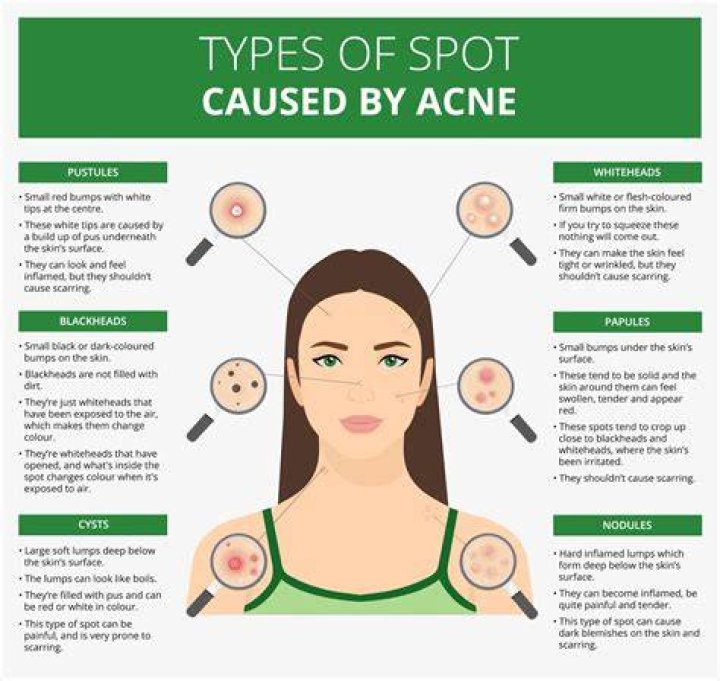
What causes a spot?
 Mia Phillips
 .
Hereof, how do you get rid of spots?
Try either a warm or cold compress Or warm compress of steam bath will help bring all that grot to the surface. Then, once the spots appear, apply a treatment like tea tree oil or hydrocortisone cream. A cold compress is good for existing pimples as it will help with the swelling, redness and soreness.
Likewise, what causes spots on face in adults? At its root, adult acne is caused by the same things that cause teen acne: excess skin oil and bacteria. Any changes in hormones, including those brought on by pregnancy and menstruation, can trigger excess oil. Women who smoke also seem to be more prone to acne. People can get acne into their 40s and beyond.
Likewise, should you squeeze spots?
“Before you start popping pimples, you should consider what's happening under the skin,” says Dr Pam Benito. “Dermatologists usually recommend not squeezing spots as it can make the skin red and inflamed and can actually push bacteria deeper into the skin,” he says. Plus, “it also increases the risk of scarring.”
What my spots mean?
Spots on your forehead are believed to indicate problems with the bladder or the digestive system, so if you're getting pimples here it could mean you're dehydrated or eating too many processed foods. The forehead is also linked to the nervous system, so high stress levels could be contributing to your breakouts.
Related Question Answers
Is sudocrem good for spots?
Use Sudocrem for spotsWhen applied directly to spots, a small amount of Sudocrem can reduce both size and redness, and help to clear skin far more quickly.Is Vaseline good for spots?
Although Vaseline® Healing Jelly doesn't directly treat acne, its protective formula means it could help your skin recover faster from a breakout. By protecting your skin and keeping bacteria out, petroleum jelly can help to speed up recovery and improve the overall appearance of the skin.How do you get clear skin?
How to Get Clear Skin Once and for All: 11 Tips From Dermatologists- DO: Use a Cleansing Brush.
- DON'T: Use Just Any Face Wash.
- DO: Use a Toner.
- DON'T: Pick, Poke or Pop Pimples.
- DO: Apply Topical Retinoids Before Bed.
- DON'T: Skip Sunscreen.
- DON'T: Neglect Your Diet.
- DO: Consider LED Light Therapy.
How can I remove spots from my face?
How to Remove Dark Spots on Face and Neck- Aloe Vera Gel. Apply aloe vera juice or natural aloe vera gel directly to the dark spots for 30 minutes in the morning and evening.
- Apple Cider Vinegar.
- Buttermilk.
- Castor Oil.
- Horseradish.
- Hydrogen Peroxide.
- Garbanzo Beans.
- Lemons.
Is Aloe Vera good for spots?
Aloe vera gel is a natural anti-bacterial substance. That means it can be directly applied to the skin, kill acne-causing bacteria, and help lessen the associated redness that seems to follow acne around like a shadow. Aloe gel contains a significant dose of magnesium lactate.How do you get rid of red spots?
Try a natural remedy to get rid of red spotsOne redness reducer you can try is putting sliced, chilled cucumber on the red spot for 15-20 minutes. Cucumbers contain vitamin C that acts as an anti-inflammatory and the cold temperature helps bring down any swelling in the red area.Does ice help pimples?
By reducing the inflammation of your pimples, you're directly reducing the size. In theory, gradually reducing the size of your pimple with ice can eventually make it go away entirely. When used on inflammatory acne, ice also has the potential to decrease redness, thereby making your pimples less noticeable.What happens if you don't burst a spot?
In your attempt to pop a pimple that's not ready to be opened, you risk exposing the inner layers of your skin to bacteria and other irritants. This can make it take longer for your pimple to heal, resulting in other pimples and even permanent scarring on your face.What happens if you pick a spot?
1? The damage isn't just happening below the surface, but also up above where you can see. Popping or picking at a pimple can obviously leave a scab. Squeezing, especially if you're doing it to a papule (a pimple without a white head,) can make your skin much redder and swollen than just leaving it be.What happens when you pop a pimple and blood comes out?
Squeezing a pimple forces out a yellow liquid called pus. The trauma caused by the squeezing can also cause blood vessels underneath to burst, causing the pimple to fill with blood. Regular pimples occur when the skin's pores become clogged with bacteria, sweat, or dirt.Why do pimples refill?
One reason a pimple keeps popping up in the same place is that the pore it developed in is damaged -- usually the result of too much picking. Prodding at a pimple can loosen the cell lining of the pore and cause the clogged oil to slip deeper into the skin, creating an inflammatory reaction.How long does it take for a spot to go?
Pimples can take as long as six weeks to go away, but smaller, single pimples may take only a few days to disappear.What is the little hard thing inside a pimple?
Milium is the singular of milia. So, you have one milium or many milia. The contents of milia are not fluid like the contents of a pustule. Pustules, those other whiteheads that are your typical pimple, are filled with a soft core of dead skin cells, sebum and, you guessed it, pus.Should you squeeze a yellow spot?
'If you really MUST, you shouldn't pop anything on your face unless it has come to a white/yellow “head”', she went on. 'If the pimple has a head, at that point it is the easiest to extract, with the least risk of scarring because the bump is very superficial to the surface of the skin.Can I pop my spot?
It's tempting, but popping or squeezing a pimple won't necessarily get rid of the problem. Squeezing can push bacteria and pus deeper into the skin, which might cause more swelling and redness. Squeezing also can lead to scabs and might leave you with permanent pits or scars.Do spots spread?
Popping a pimple — whether you're successful or not can spawn more spots. “The bacteria, oil, and debris that are being contained by the acne papule, pustule or cyst once released, can spread and lead to more acne,” Shah says. No one wants to play Whack-a-Mole with their skin.Can acne be a sign of cancer?
As if acne weren't bad enough, now there's evidence that people who are prone to getting acne may be more susceptible to developing certain cancers. Acne may be linked to increased risk of melanoma and breast cancer. They were also 17 percent more likely to develop breast cancer than those with mild or no acne.Can stress cause spots?
You know stress can cause acne, but it turns out your skin can indicate you're feeling maxed-out in other ways, like having a rash pop up seemingly out of nowhere. It usually appears as raised spots or hives on the stomach, back, arms, and face, says Elizabeth Lombardo, Ph.What food causes pimples?
This article will review 7 foods that can cause acne and discuss why the quality of your diet is important.- Refined Grains and Sugars.
- Dairy Products.
- Fast Food.
- Foods Rich in Omega-6 Fats.
- Chocolate.
- Whey Protein Powder.
- Foods You're Sensitive To.