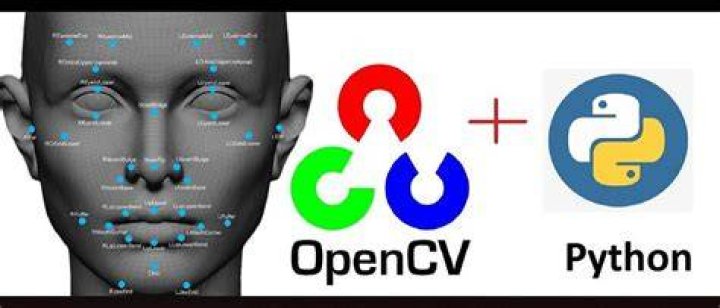
How do I run OpenCV in Python?
 Rachel Newton
- Goto opencv/build/python/2.7 folder.
- Copy cv2. pyd to C:/Python27/lib/site-packeges.
- Open Python IDLE and type following codes in Python terminal. >>> import cv2 >>> print cv2. __version__
.
Also, how do I run OpenCV?
Install OpenCV 3 on Windows
- Step 1: Install Visual Studio.
- Step 2: Install CMake.
- Step 3: Install Anaconda (a python distribution)
- Step 4: Download and extract opencv-3.3.
- Step 5: Generate Visual Studio project using CMake.
- Step 6: Compile OpenCV.
- Step 7: Update System Environment Variables.
- Step 8: Testing C++ code.
Additionally, why cv2 is used in Python? OpenCV-Python. Python is a general purpose programming language started by Guido van Rossum, which became very popular in short time mainly because of its simplicity and code readability. It enables the programmer to express his ideas in fewer lines of code without reducing any readability.
Besides, can I use OpenCV with Python 3?
Yes support for Python 3 it is still not available in current version, but it will be available from version 3.0, (see this ticket). If you really want to have python 3 try using development version, you can download it from GitHub.
What is OpenCV used for?
OpenCV (Open Source Computer Vision) is a library of programming functions mainly aimed at real-time computer vision. In simple language it is library used for Image Processing. It is mainly used to do all the operation related to Images.
Related Question Answers
Why do we use OpenCV?
About. OpenCV (Open Source Computer Vision Library) is an open source computer vision and machine learning software library. OpenCV was built to provide a common infrastructure for computer vision applications and to accelerate the use of machine perception in the commercial products.What is the use of OpenCV in Python?
OpenCV Python is nothing but a wrapper class for the original C++ library to be used with Python. Using this, all of the OpenCV array structures gets converted to/from NumPy arrays. This makes it easier to integrate it with other libraries which use NumPy. For example, libraries such as SciPy and Matplotlib.How do I download OpenCV in Python?
Download latest OpenCV release from sourceforge site and double-click to extract it.- Goto opencv/build/python/2.7 folder.
- Copy cv2. pyd to C:/Python27/lib/site-packeges.
- Open Python IDLE and type following codes in Python terminal. >>> import cv2 >>> print cv2. __version__
How big is OpenCV?
OpenCV
| Original author(s) | Intel Corporation, Willow Garage, Itseez |
|---|---|
| Size | ~200 MB |
| Type | Library |
| License | BSD license |
| Website | opencv.org |
How do I install pip?
Once you've confirmed that Python is correctly installed, you can proceed with installing Pip.- Download get-pip.py to a folder on your computer.
- Open a command prompt and navigate to the folder containing get-pip.py.
- Run the following command: python get-pip.py.
- Pip is now installed!
What can we do with OpenCV?
What can you do with OpenCV?- In-built data structures and input/output.
- Image processing operations.
- Building GUI.
- Video analysis.
- 3D reconstruction.
- Feature extraction.
- Object detection.
- Machine learning.
Does OpenCV use GPU?
The OpenCV GPU module is a set of classes and functions to utilize GPU computational capabilities. It is implemented using NVIDIA* CUDA* Runtime API and supports only NVIDIA GPUs. The OpenCV GPU module includes utility functions, low-level vision primitives, and high-level algorithms.Where is Anaconda installed Mac?
What is the default path for installing Anaconda? If you accept the default option to install Anaconda on the “default path” Anaconda is installed in your user home directory: Windows 10: C:Users<your-username>Anaconda3 macOS: /Users/<your-username>/anaconda3.What is Numpy in Python?
Python Numpy. Numpy is a general-purpose array-processing package. It is the fundamental package for scientific computing with Python. Besides its obvious scientific uses, Numpy can also be used as an efficient multi-dimensional container of generic data.How do I import OpenCV into Python 3?
Enter import numpy and make sure Numpy is working fine. Download latest OpenCV release from GitHub or SourceForge site and double-click to extract it. Goto opencv/build/python/2.7 folder. Copy cv2.
Installing OpenCV from prebuilt binaries
- Python 3.
- Numpy package (for example, using pip install numpy command).
How do I know if cv2 is installed?
To see if you have installed it successfully, fire up your Python and issue the following command:- import cv2 # import the opencv library.
- cv2. __version__ # this will print the version of your opencv3.
How do I download OpenCV on Mac?
Install OpenCV 3 on MacOS- Step 1: Install XCode. Install XCode from App Store.
- Step 2: Install Homebrew. Launch a terminal from Launchpad.
- Step 3: Install Python 2 and Python 3.
- Step 4: Install Python libraries in a Virtual Environment.
- Step 5: Install OpenCV.
- Step 6: Make OpenCV3 Python symlink in our virtual environment.
- Step 7: Test OpenCV3.
Is OpenCV and cv2 same?
In this, all OpenCV data types are preserved as such. For example, when loaded, images are of format cvMat , same as in C++. Later, OpenCV came with both cv and cv2 . Now, there in the latest releases, there is only the cv2 module, and cv is a subclass inside cv2 .What is OpenCV written in?
C++ CCan we do image processing in Python?
Python is an excellent choice for these types of image processing tasks due to its growing popularity as a scientific programming language and the free availability of many state-of-the-art image processing tools in its ecosystem.What is Imutils in Python?
Imutils are a series of convenience functions to make basic image processing functions such as translation, rotation, resizing, skeletonization, and displaying Matplotlib images easier with OpenCV and both Python 2.7 and Python 3.How do I add cv2 to PyCharm?
Goto C:Python27Libsite-packages directory and paste the cv2. pyd file.
Follow these steps:
- Go to File>Settings in Pycharm IDE Window.
- Search Project Interpreter in search bar.
- Click on any package from the available options.
- Package window will open from where you can install any packages.